
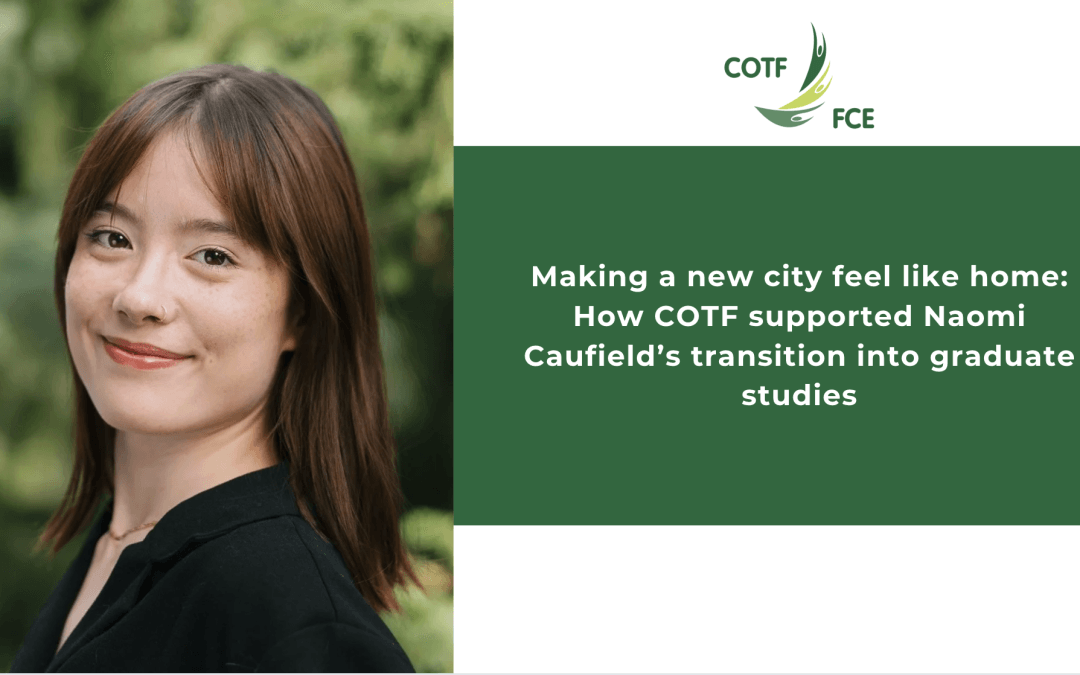
For Naomi Caufield, receiving the COTF Scholarship for Financial Need in 2024 played a meaningful role in easing her transition into McGill University’s Master of Occupational Therapy program. Originally from outside the province of Quebec, Naomi entered her first semester navigating a new degree, new city, and rising living costs. Looking ahead, she will be graduating with her MScOT from McGill University in 2026.
The impact of COTF support
Receiving COTF funding allowed Naomi to devote her energy to learning and clinical growth rather than worrying about basic expenses.
“This scholarship greatly helped to alleviate the financial stress that I have experienced, especially as an out-of-province student in Quebec with drastically increasing fees. The money went directly towards my rent and groceries for my first fall semester, which also helped to ease the transition into a new degree and city. It enabled me to better focus on my studies, as I didn’t have to worry as much about how I would be able to afford groceries for that semester.”
Looking ahead, Naomi is eager to continue expanding her skills in two emerging areas of interest: outpatient stroke rehabilitation and mental health.
“I was really interested in the treatment interventions that we explored during our stroke unit, and spent a day shadowing an outpatient stroke clinic this summer as well. Regarding mental health, I have an interest in helping people re-integrate into life after a mental health crisis, as many people do not have the support necessary, but can thrive with some guidance to get them back on their feet.”
Advice for future COTF scholarship applicants
Naomi is enthusiastic about encouraging other students to apply for support when they need it.
“I have already recommended to three peers in my class to apply for the scholarship this year, as they are also from other provinces and are feeling immense financial stress. I let them know that although there are not many sources of financial support for professional graduate students, it is wonderful that our association is providing an opportunity to help future clinicians.”
Life beyond occupational therapy
Outside of the classroom, Naomi continues to nurture her long-standing passion for the arts. She works as a photographer, often capturing the creative processes of other artists, from dancers to ceramicists.
Naomi also enjoys spending time outdoors, especially hiking, swimming, and being with family and friends.
What motivates her most about the profession?
“My favourite part about being an occupational therapist is seeing the direct positive impact that holistic and client-centred care has on people’s lives. I applied to the program knowing that my personal values would align with the work, but was surprised at the degree to which it feels like I was meant to find this profession.”